A Painted Language - Part 2
We're looking at a medieval Last Judgment. Heaven and hell, the saved and the damned, all rendered in a style a long way from realism. It's easy to call that a lack of skill. It isn't. They say a picture is worth a thousand words, but what happens when the picture is meant to BE the words? Come with me, and I'll render this hidden language by hand.
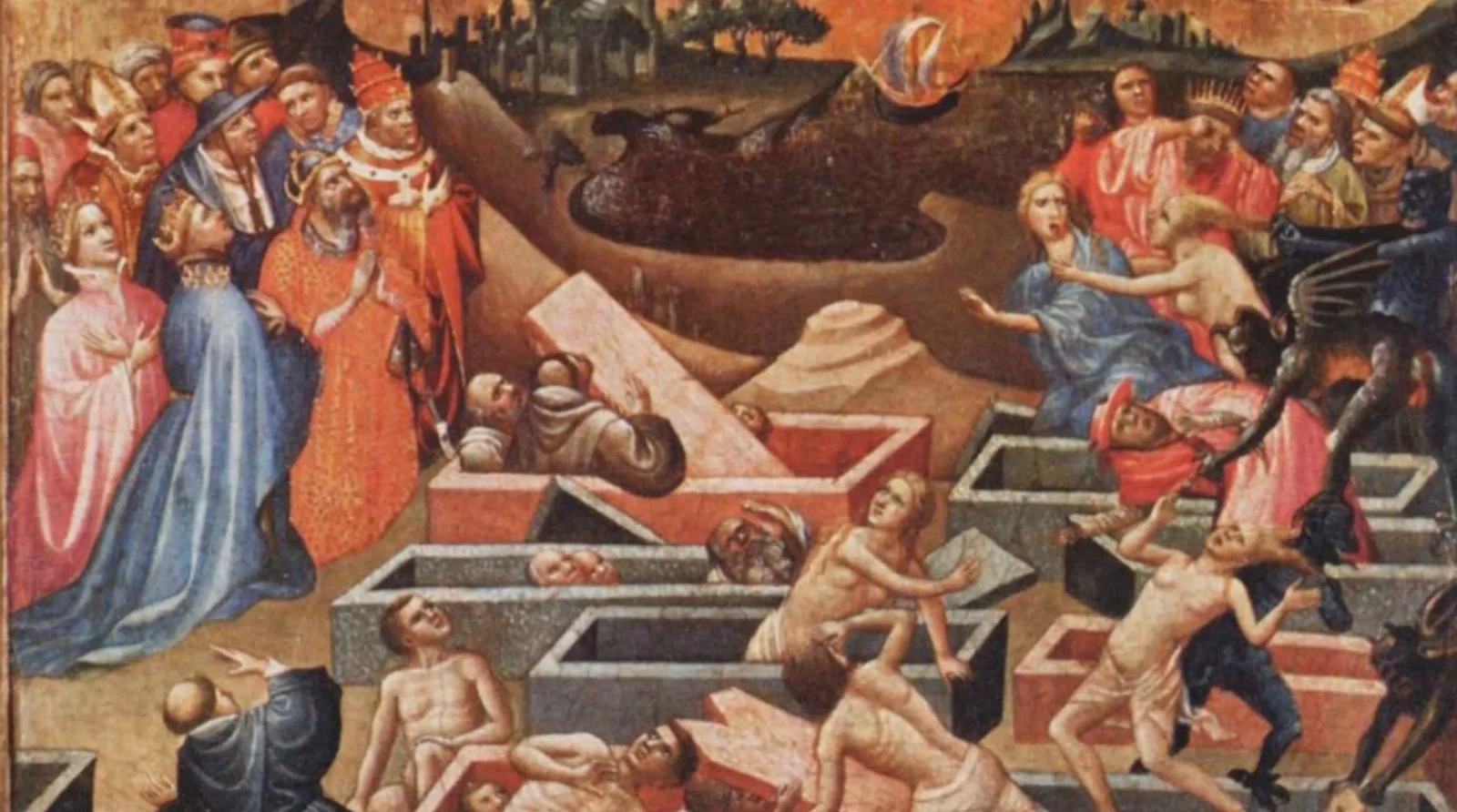
In this current study I've rendered myself in the center with a square halo. Holding a Memento Mori in my right hand and making the gesture of the sermon with my left. Now I add the key figure of the piece.
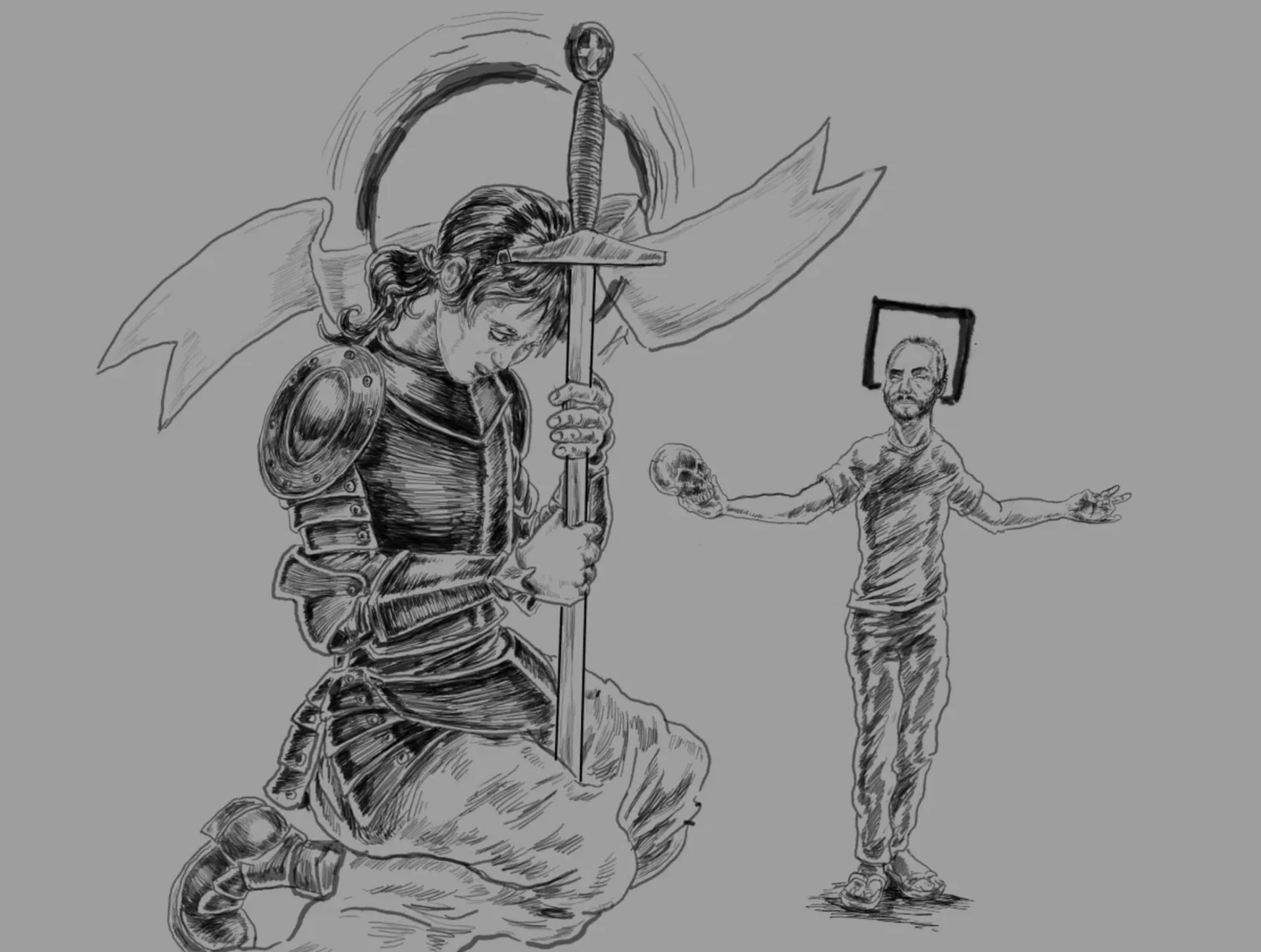
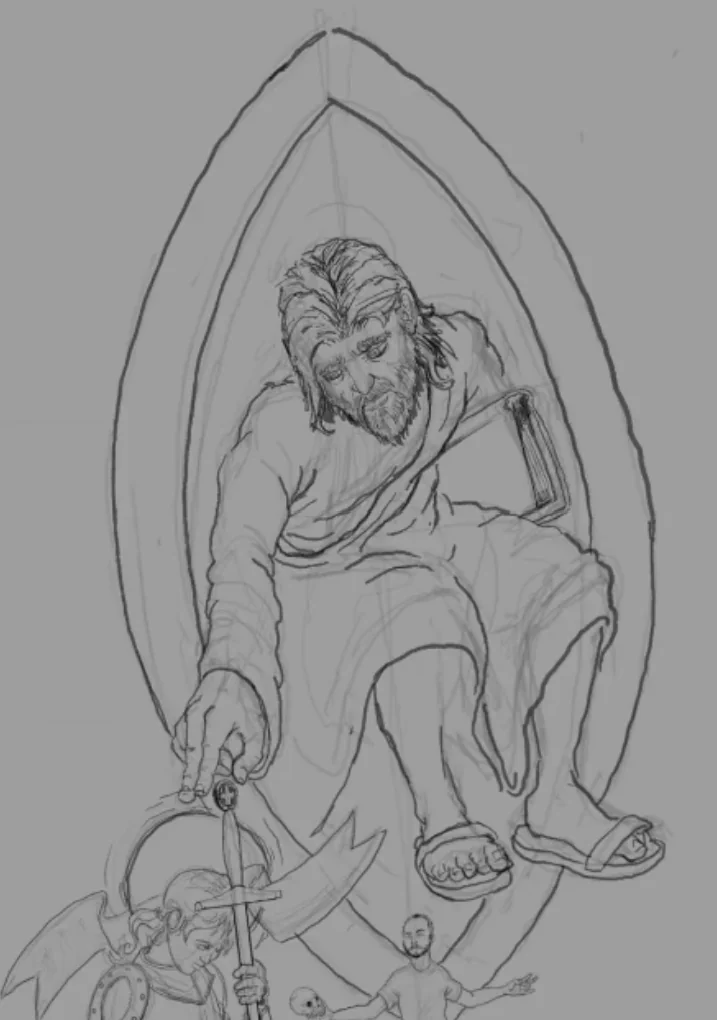
Christ Pantokrator:("Ruler of the Universe")
I've added a depiction of Christ commonly used in the Eastern Orthodox tradition. A Pantokrator blesses with his right hand and holds a book of the gospels in his left. Though, I've taken some liberties with this rendering: his blessing hand is directed toward Joan of Arc. Christ's actual left hand isn't visible from our perspective.
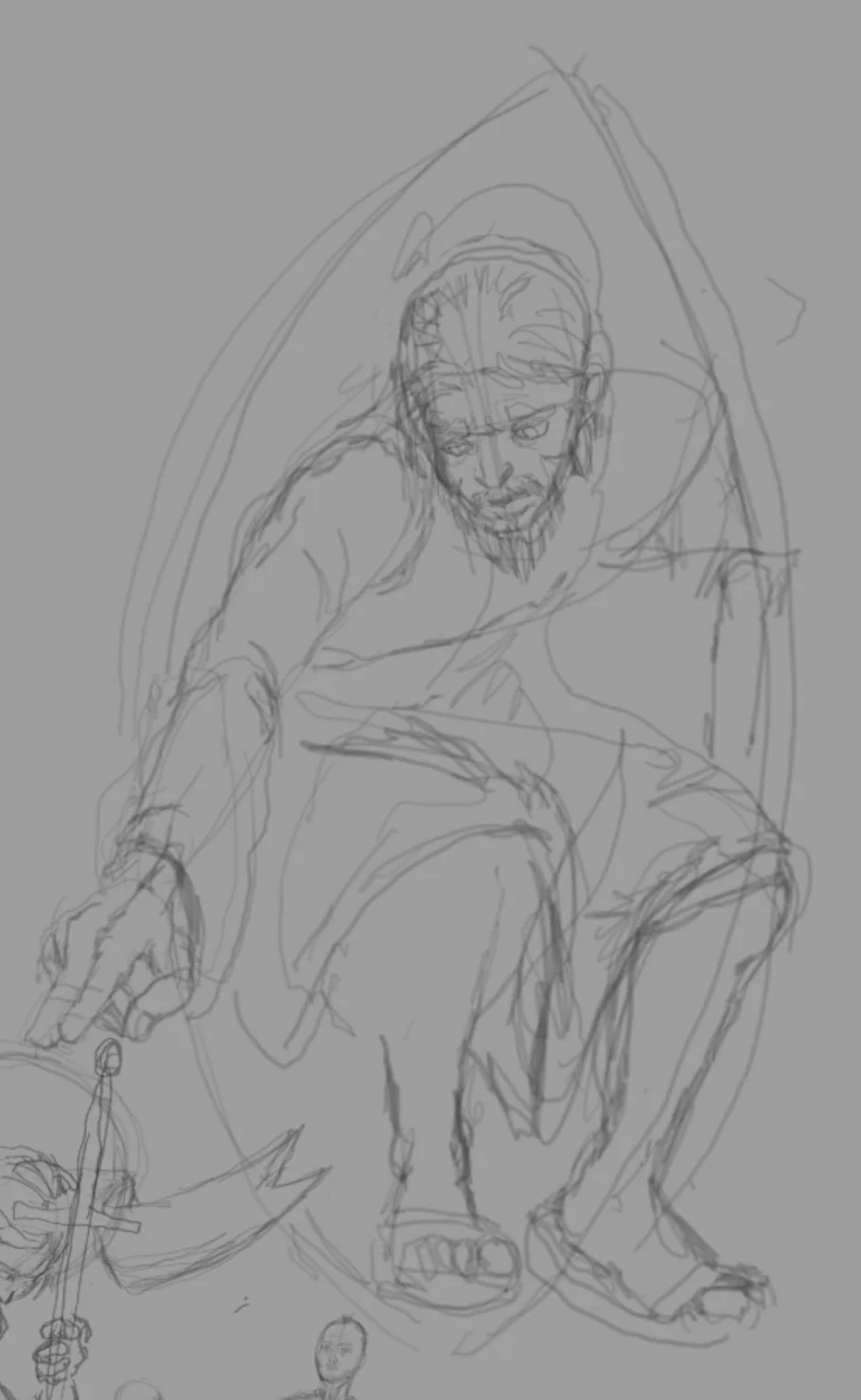
Hand Gesture:(Blessing)
This is an interesting one. Most of us interpret the two fingers extended, the remaining digits clasped, to be a "blessing" gesture. I've actually rendered it in this way directly, as Christ is touching Joan's halo with those two fingers. This is actually likely a misinterpretation, as we see instances of Christ and others using this same gesture in situations where it wouldn't make sense. There are depictions of him using it while facing a demon, for example. As it turns out this gesture is seen in early pagan Greek and Roman art. It was meant to be an indicator that the character making the gesture is speaking.
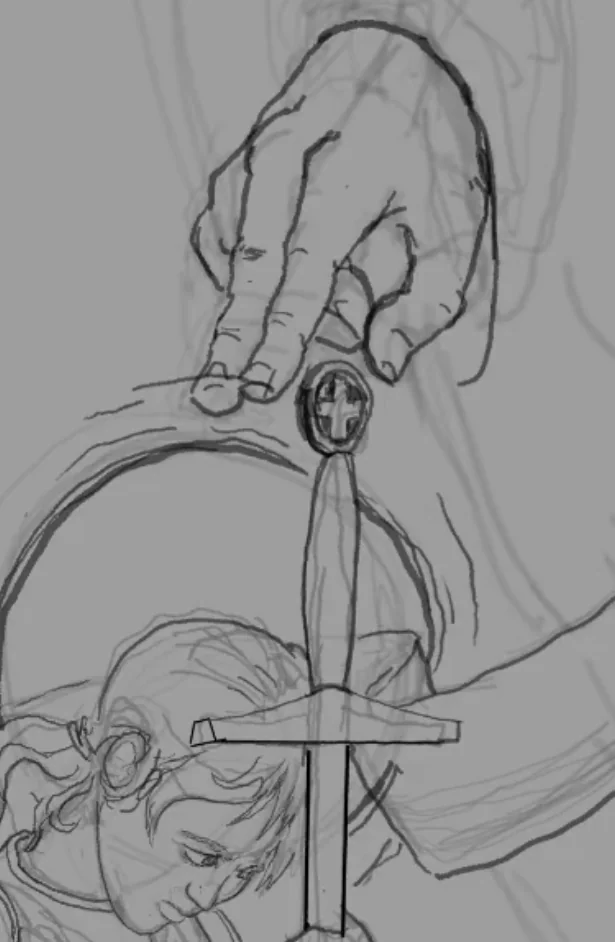
Mandorla:
I've drawn Christ inside a vesica piscis. It turns out when the vesica piscis is used to encapsulate a figure in religious art we call it a "mandorla". The mandorla is meant to depict "theophany" or, more simply put: the passage between worlds.
Cruciform Halo:
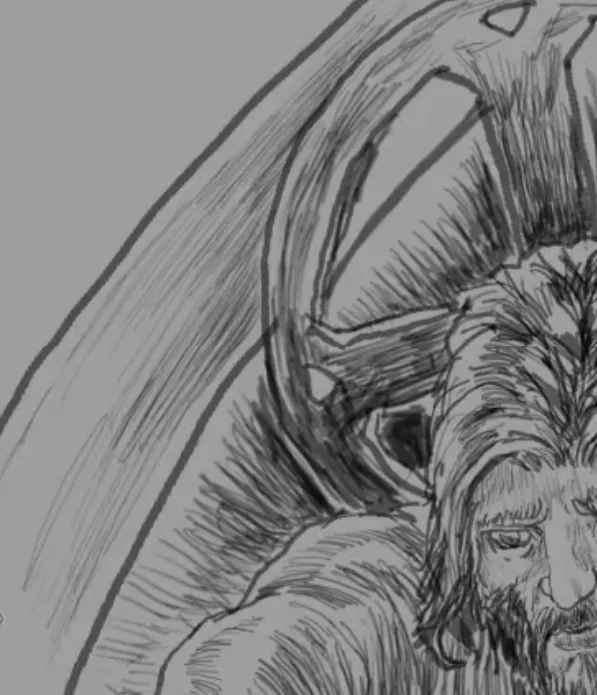
Now I am rendering a circular halo for Christ. This is a special circular halo containing a cross known as the "Cruciform Halo". Only Christ is allowed to wear this halo type, at every stage of life. This would make it much easier to differentiate a regular infant from the infant Christ in a composition.

Divine Darkness:
As I start shading the drawing you can see that I am rendering the mandorla center darker than the outer parts. This is not to illustrate material depth but instead it's alluding to deliberate apophatic theology. The idea that God's light exceeds perception, and therefore maximum light renders as dark.
This piece isn't yet complete. Along the way we've been learning an ancient language. Even my own mistakes, like using the blessing hand as literal action on Joan's halo, helped me discover the original meaning. I've also planned to add the attributes of Joan's three saints, Michael, Margaret, and Catherine, to the banner behind her head. We'll get to each of those, and finish the language, in part 3. I hope you're enjoying this journey as much as I am.