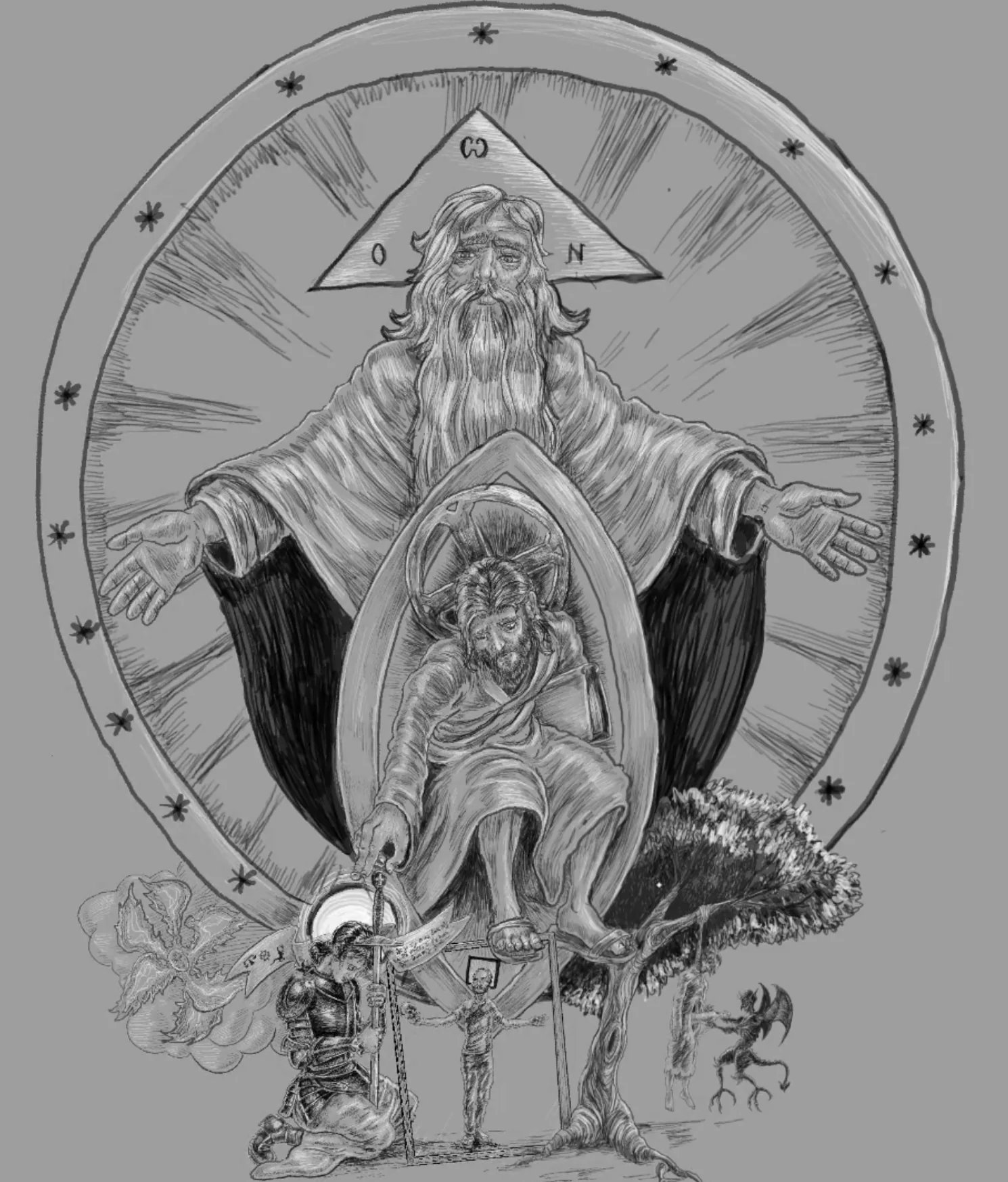
A Painted Language - Part 3
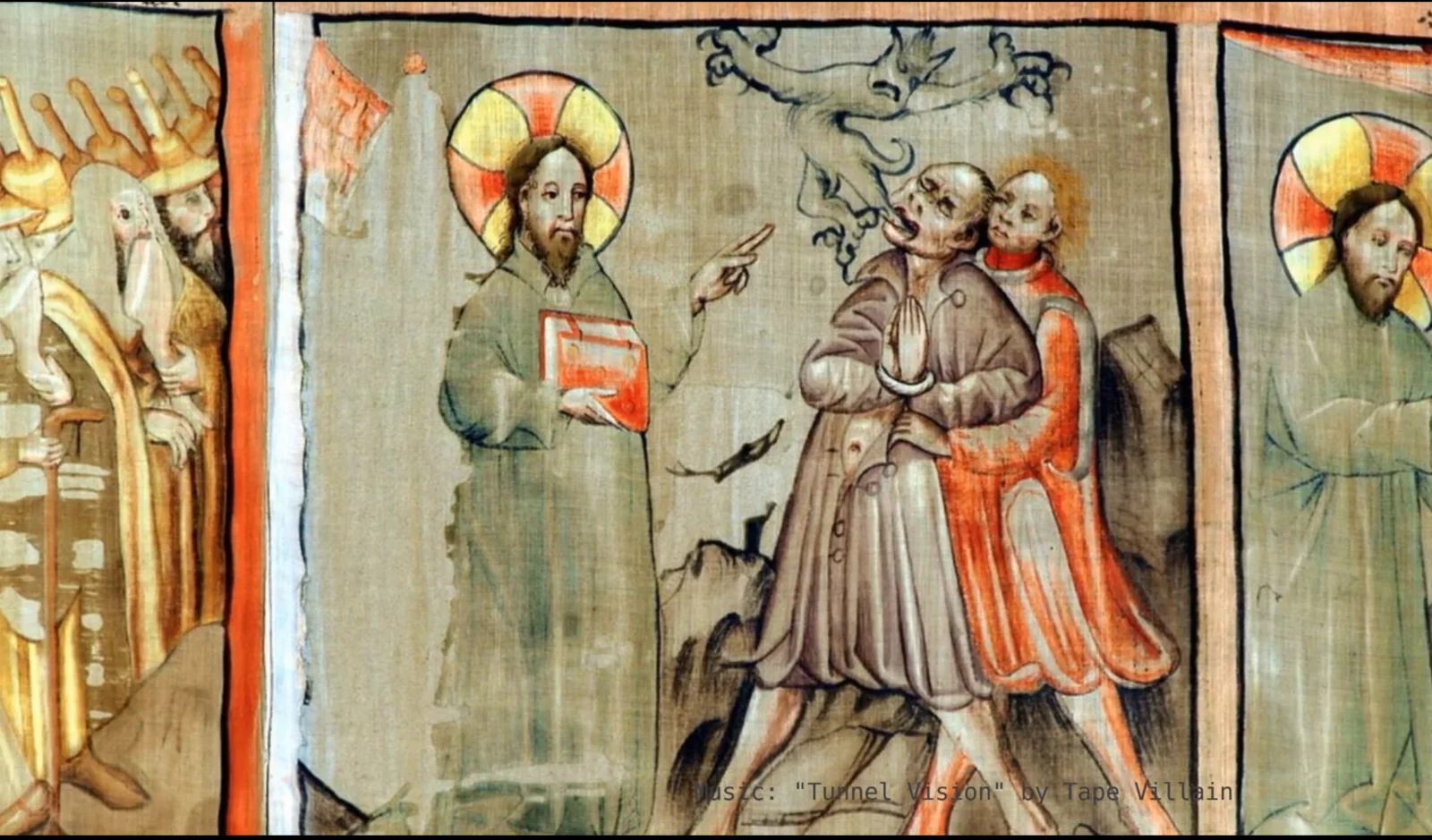
This medieval painting shows Christ performing an exorcism. It turns out the medieval artist had a strict visual code for demons: how to render one, and how to defeat one. Let's learn it.
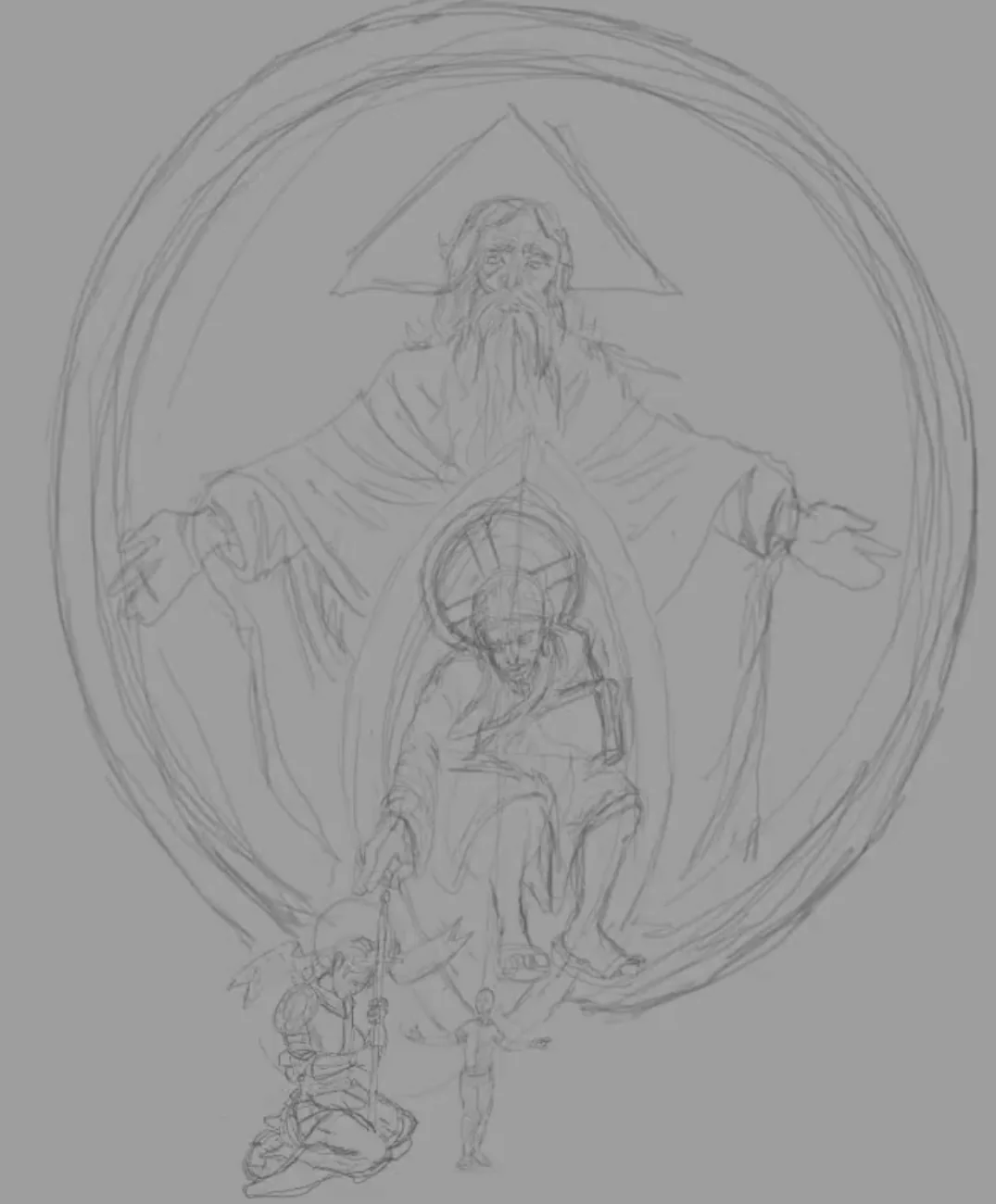
As seen in the study so far: myself at the bottom center, Joan of Arc to my right, Christ as the Ruler of the Universe above both of us. I've decided to add another somewhat unorthodox depiction to the page.

The Trinity:
By adding God the Father to the composition, I am creating a Trinity image. From looking at other depictions of the Trinity, the way it is portrayed is varied. In some cases God the Father holds the slain Christ in his arms surrounded by angels. Other times Christ and the Father appear side by side, usually with a flying dove between them. So this image is not a proper Trinity yet.
Paternitas:
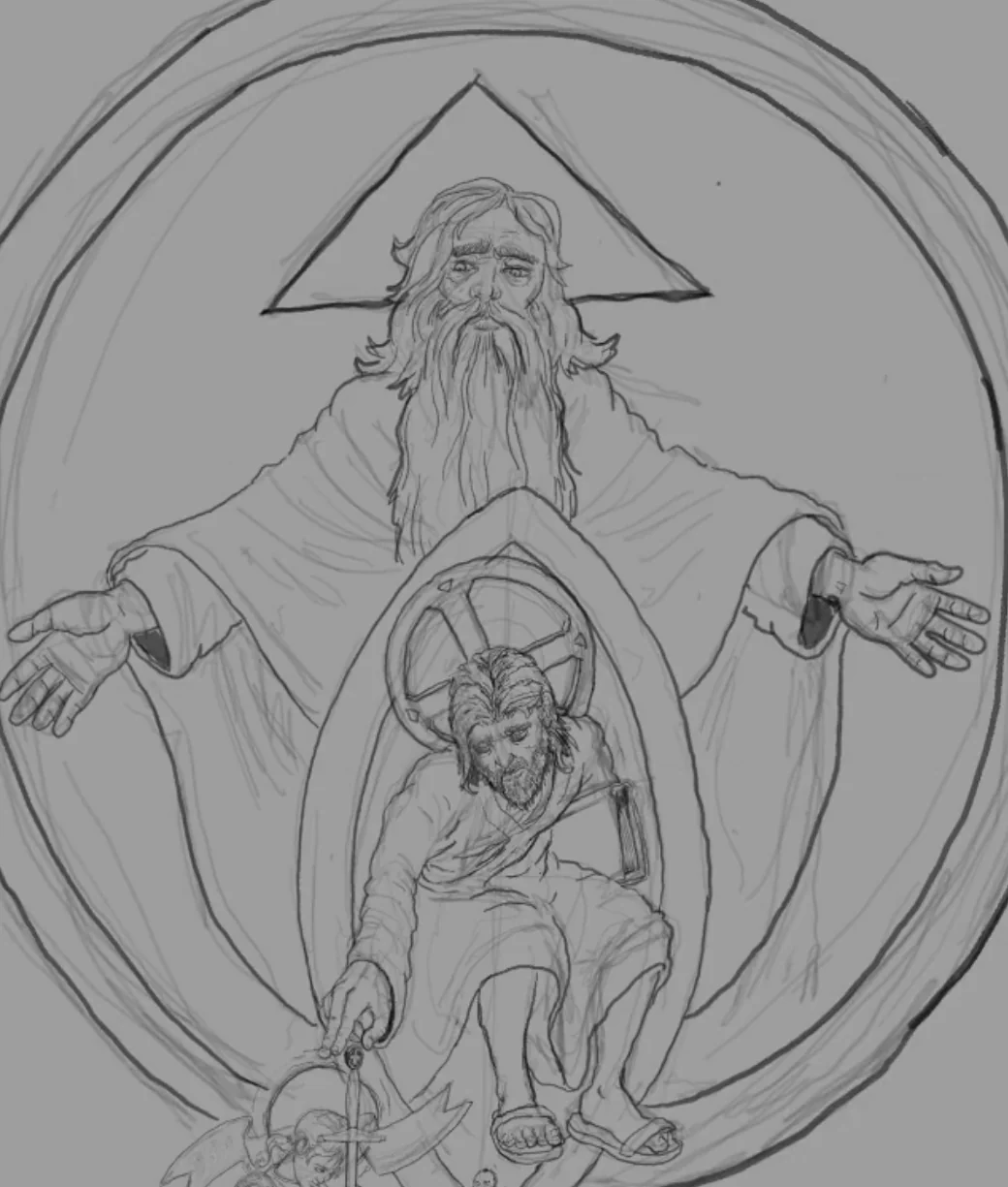
The composition I've used is a loose rendition of Paternitas: God the Father displaying the Son in his bosom. Many times he does this with the crucified Christ. My body gesture matches more closely how Christ would be shown traditionally. Looking at this, I will in the future add a dove as if flying out of my square halo. I am fond of the verse: "The Kingdom of God is Within."
Triangle Halo:
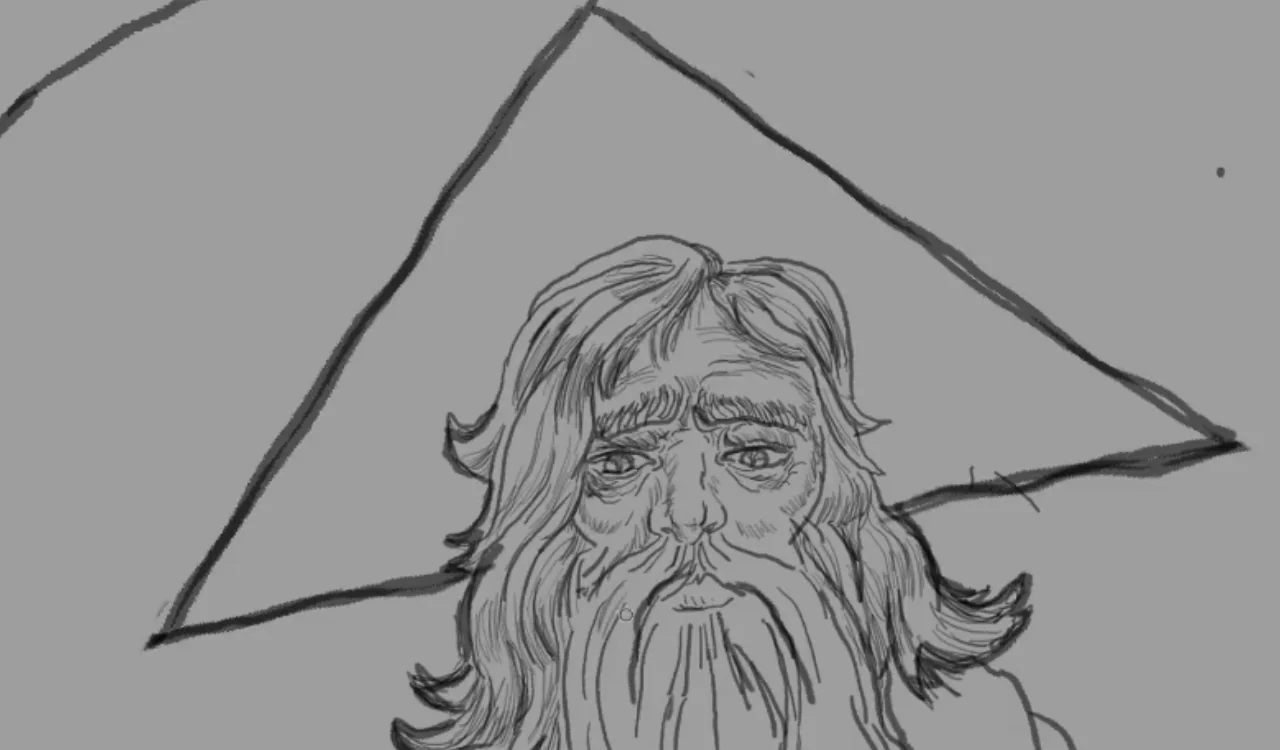
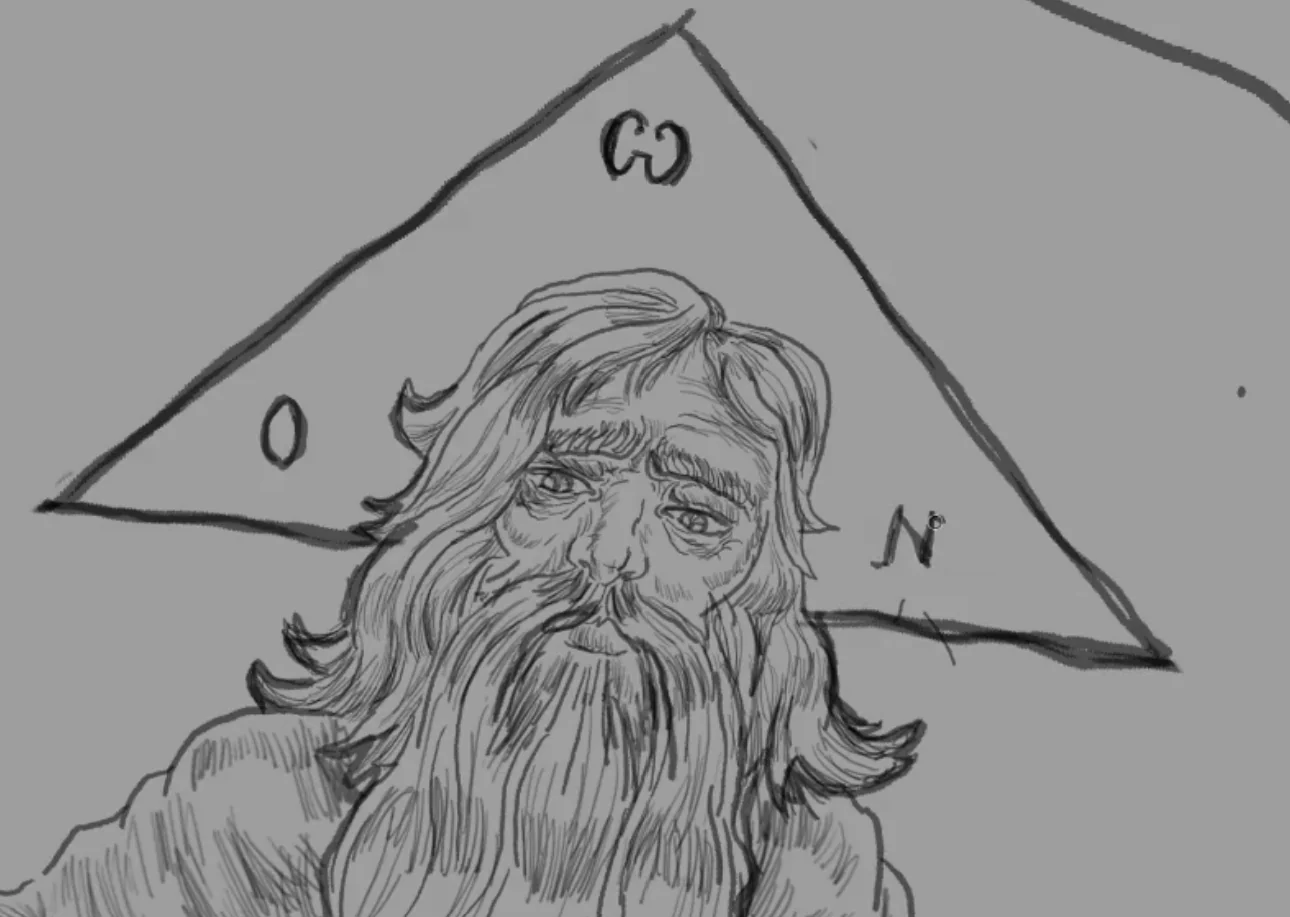
You can see I've given God the Father a triangular halo. This halo type is only ever used for God the Father. The triangle represents the Trinity unified.
HE WHO IS:
Inside the triangular halo I rendered three Greek letters. These stand for "He Who Is", the Septuagint's rendering of the Name from the burning bush. The letter that looks like an "O" is the article, "the One". The symbol that looks like a "W" is "Omega" in its Byzantine form. The "N" is a participle that, used with the Omega, takes on the meaning of "Being" or "Existing". Basically, God's ineffable name. I should note that you'll usually find these symbols in the halo of Christ, not the Father, where they affirm that Christ is the same "I AM" from the burning bush. I copied mine from a reference piece, so I must have found one of the rarer images that places them on God the Father. The name fits either way, since it belongs to God, but it isn't the common choice.
Homunculus Soul:
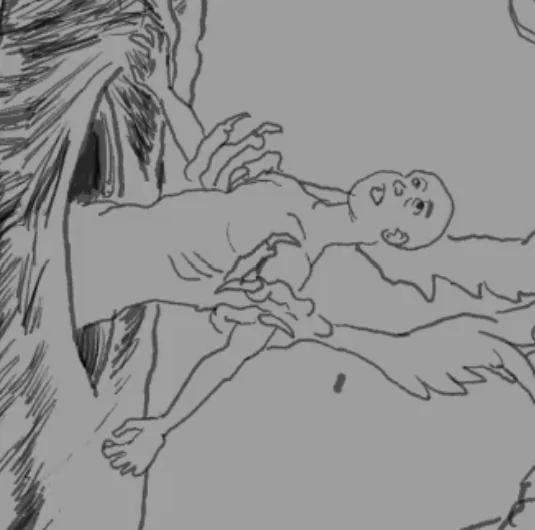
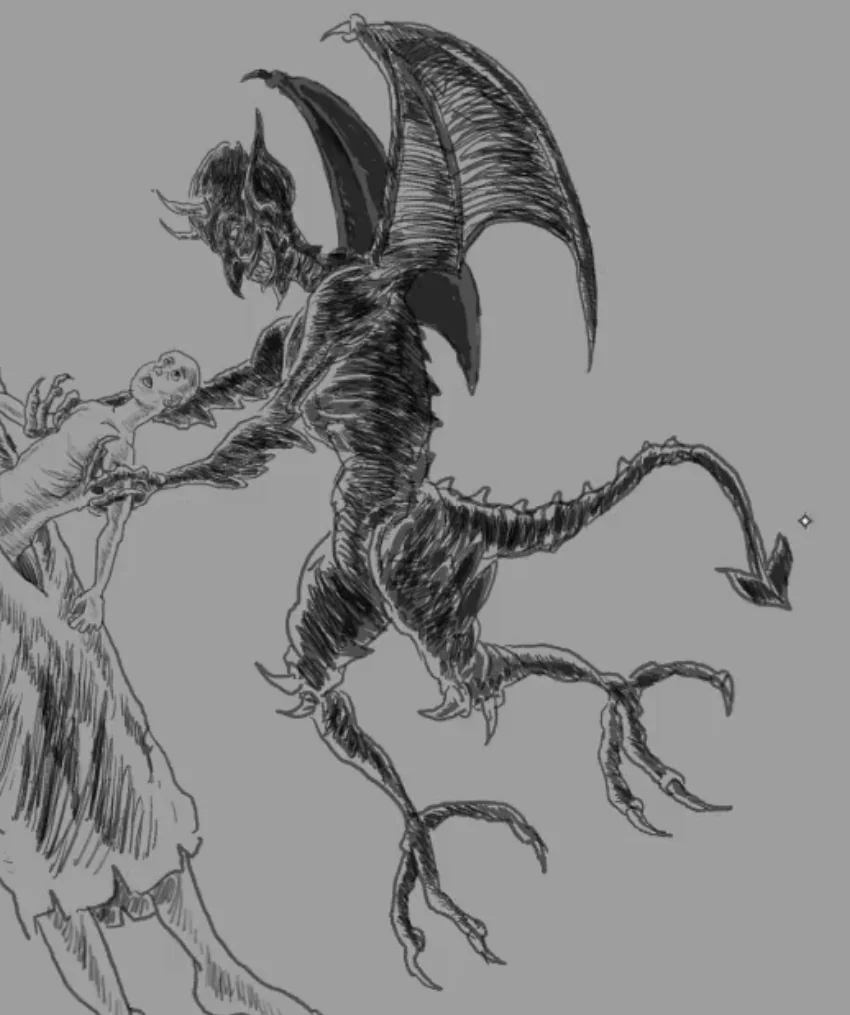
I felt the composition to my figure's left was empty. I decided to add a depiction of Judas hung from a tree. Many times souls were rendered as a "homunculus", a small figure of the deceased. These usually escape from the mouth. In the case of Judas, they burst forth from his abdomen, as I've drawn.
Demons:
When rendering a demon, the medieval artist took great care. They were always to be shown only in profile, and never granted eye contact with the viewer. They say the eyes are the windows to the soul, probably a very wise decision. Additionally, they were always rendered black in this period, no doubt to be reminiscent of shadows.
Joan of Arc's Voices:
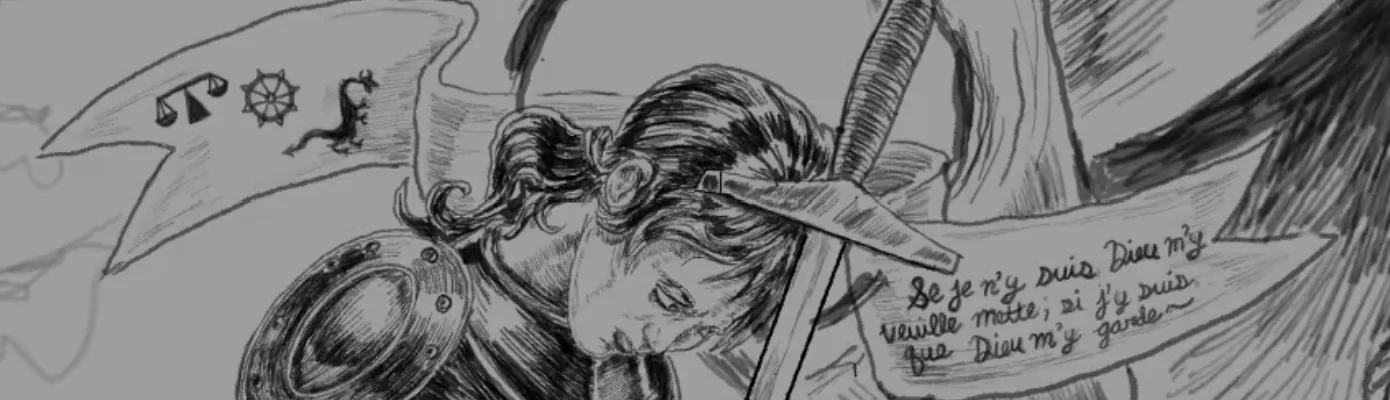
I've finally gotten to the point in the composition of filling in the banner behind Joan of Arc's head. On the side to her right, I am putting the attribute for each saint's voice that she heard. First, St. Michael: the Scales. Second, St. Catherine: the Spiked Wheel. Third, St. Margaret: the Dragon. On the left side of this banner I am writing something Joan was documented saying during her trial when asked if she was "under grace", in English: "If I am not, may God put me there; if I am, may God keep me there." It may not make sense to us, but someone of the time would have taken great care how to answer this question. Yes would have meant she was guilty of the sin of presumption; no, and she would condemn herself before God. I render this statement in the original French in the image.
Seraphim:
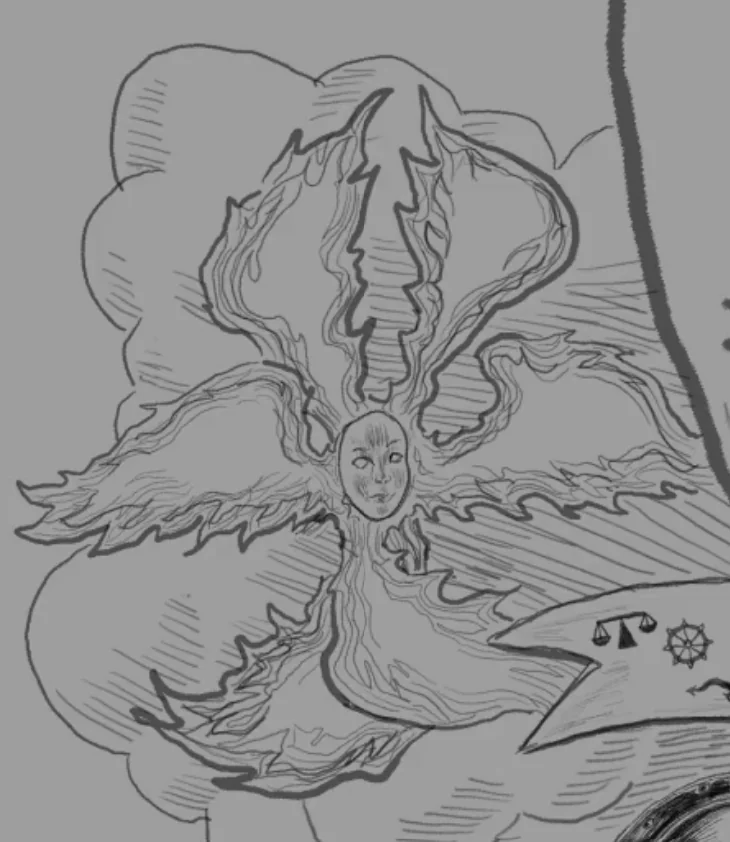
I felt the tree Judas is hanging from unbalanced the composition. So I decided to add a cloud and a seraph to the right side of Joan. The seraphim are a type of angel shown with six wings. They are said to attend the throne of God and to be the closest to him in the hierarchy. The face of the seraph looks upon Joan with a smile. Seraphim are called "The Burning Ones". Joan was burnt for her faith; I feel the seraph is a more noble depiction of that burning, physical and spiritual combined into a fitting symbol.
Spatial Grammar:
In medieval art, the right side signifies the saved, the left side signifies the damned. This rule is present in all aspects. This is why I show Christ blessing Joan with his right hand. It's why I placed Judas and his demon to the left of Christ. It's why Joan and the seraph reside on Christ's right. It's also why I placed myself in the center. One aspect that bothers me is that I've drawn myself using my left hand for the gesture of the sermon.
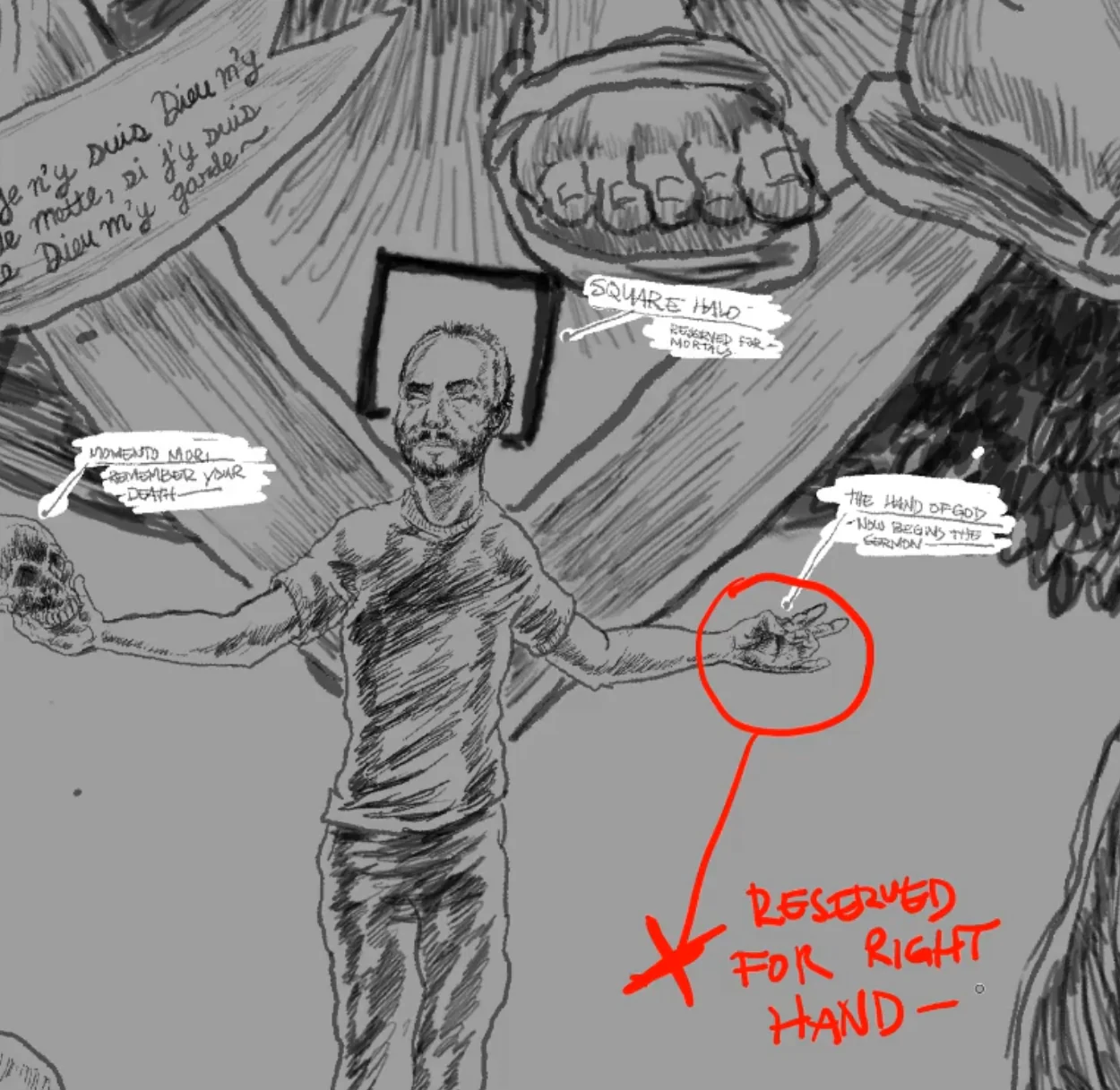
The piece is nearly complete. As you can see, I've added a frame around myself in the image. This is the frame of a mirror. With that one move, the rule is mended. In the reflection I now make the gesture of the sermon with my right hand, the hand of the saved, and the skull falls to my left, the side of death and the damned, exactly where a memento mori belongs. The mistake became the teacher. Fittingly, we see through a glass darkly, and as we learned with the divine darkness, sometimes that is where the most light is. The rest of the video will show me adding some highlighting. I've learned some things about a once well known visual language, and hopefully you have as well.